
A mini massage gun may be small, but its panel can carry much of a brand’s visual identity. For a retailer, importer, or corporate gift buyer, an unexpected color difference can affect product photography, packaging consistency, and approval of an entire order.
Successful Pantone matching mini massage gun projects therefore need more than a color number in an email. Buyers should define the physical color reference, the panel material and finish, and the sample that will serve as the standard for production. This guide explains what to agree on with a supplier before placing a custom order.
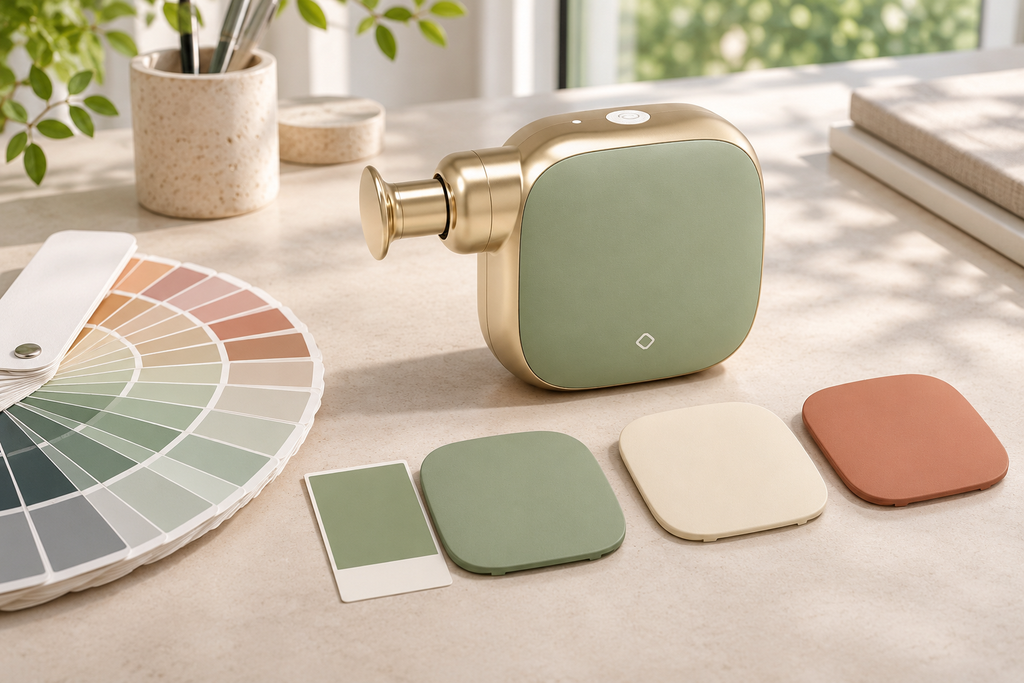
Pantone Matching Mini Massage Gun Panels Starts With the Right Reference
A Pantone code is a useful starting point, but it does not describe every detail of a finished panel. The same intended color can appear different on a glossy surface, a matte surface, a printed graphic, and a gift box.
First, send the complete Pantone reference, including its suffix where applicable. In Pantone’s graphics system, “C” and “U” refer to colors printed on coated and uncoated paper. Those paper samples can look noticeably different from each other. Neither is, by itself, a guarantee of how the color will appear on a plastic part. support.pantone.com
If panel color is critical, ask the supplier whether a physical plastic color reference or an approved product sample should guide development. Pantone offers plastic chips with matte and glossy surfaces, but the final panel still needs evaluation in its actual material and finish. Plastic Chips
A practical color brief should identify:
- The full Pantone code and the reference being supplied
- Whether the target appearance is matte, satin, or glossy
- The panel area to be colored
- Any nearby logo, printed pattern, or differently colored body component
- Whether matching the device, packaging, or both is the priority
Avoid approving a custom panel color from a phone photo alone. Screens, cameras, and lighting make photographs helpful for discussion but unreliable as the final color standard.
Ask How the Color Will Be Produced
Before requesting a match, confirm how the selected model’s panel is made. Depending on the product and design, color might come from pigmented material, a surface coating, or printed artwork. Each approach has a different approval point.
| Appearance requirement | What the buyer should confirm | Sample to approve |
|---|---|---|
| Solid-color panel | Panel material, finish, and available color process | Finished panel in the intended material |
| Coated panel | Coating color, sheen, and edge appearance | Coated production-style panel |
| Printed design | Artwork file, background color, print placement, and coverage | Printed panel with final artwork |
| Matching gift box | Box stock, print method, and finish | Physical packaging proof |
This distinction matters when a logo sits on a colored panel. A brand may approve the background shade but later find that its white logo lacks contrast, or that a printed illustration looks different over the chosen base color. Review the assembled design rather than approving each element separately.
For NBQ’s mini pocket massage gun range, panel colors, logos, printed artwork, and branded packaging are options buyers can discuss for a custom project. The supplier should confirm the production method and available choices for the specific model before artwork and color are approved. NBQ
Make Color Sample Approval a Defined Purchasing Step
The most useful sample is one that answers a production question. A loose color swatch can show direction; a finished panel shows how that color works with the part’s material, texture, shape, and printed details.
Use this color sample approval sequence when planning a branded order:
- Submit the design brief. Include the model, estimated quantity, destination market, target date, Pantone reference, logo files, artwork, and packaging requirements.
- Confirm feasibility and cost. Ask which color process is available for that model and whether a new color affects minimum quantity, sample charges, or schedule.
- Review a physical panel sample. Where possible, request a sample made with the intended material and finish. Check the edges and areas close to the logo, not only the broad center surface.
- Review the assembled product. Place the panel next to the body, buttons, attachments, and box. Decide whether the overall appearance works for your brand.
- Record approval clearly. Assign the approved sample an identification number and record its date, finish, artwork version, and any accepted differences.
- Confirm the production comparison method. Ask how the supplier will compare later parts with the approved sample and how a disputed batch will be handled.
If the purchase order covers several colors, approve each one separately. “Same artwork in three colors” does not ensure that logo contrast and print legibility will work equally well on all three panels.
Keep an approved sample with the buyer and, if practical, a matching reference with the supplier. This gives both teams a clearer basis for resolving questions than an old email attachment or an uncalibrated photograph.
Check Color Under More Than One Light
A panel may appear close to its reference in an office yet look different under a retailer’s display lighting or in a buyer’s photo studio. This can happen when materials and colorants respond differently to a change in light.
Ask the supplier how samples are viewed during approval. Consistent lighting makes comparisons more useful; a second relevant light source can reveal a mismatch that was less obvious under the first. Color measurement also depends on agreed conditions, including the instrument, viewing geometry, illuminant, surface gloss, and—in some cases—sample thickness. What Variables Affect the Results
For most purchasing teams, the immediate decision is straightforward: assess the physical panel and packaging in the lighting conditions that matter to the project, then document the result. If close numerical control is essential, ask whether the supplier can measure the finished part and agree on the method and tolerance before production. A tolerance number without a defined measurement method can create more disagreement than clarity.
Plan for the Difference Between a Sample and a Production Run
An approved sample establishes the target appearance; it does not eliminate every source of variation. Resin lots, pigments, additives, molding conditions, surface texture, and the way a small or curved part is measured can all affect color comparisons. X-Rite
That is why buyers should clarify what happens after sample approval. Useful questions include:
- Will production panels be compared with the approved physical sample?
- At what stage will the first production parts be checked?
- Who will decide whether a difference is acceptable?
- Will printed artwork and panel color be checked together?
- What happens if a later order needs to match the first order?
For repeat retail programs, record the approved sample and artwork version for each order. A brand launching in the US and later supplying distributors in Europe or the UK will benefit from a reference that does not depend on one person’s memory of the original color.
Also consider how much visible consistency the product needs. A gift campaign with a multicolor illustration may allow more visual flexibility than a product line built around a distinctive single-color panel. Tell suppliers which elements are essential to your brand identity so they can focus the approval process accordingly.
Compare Supplier Quotes on the Same Color Brief
Two quotations for a custom massage gun may cover different work. One might assume an existing panel color with a printed logo; another might include development of a new panel shade and a physical sample. A lower unit price is difficult to evaluate until those differences are clear.
When comparing suppliers, request written answers to these points:
- Color scope: Is this an existing option or a newly developed color?
- Sample scope: Will you receive a color swatch, an unfinished panel, or a complete branded unit?
- Artwork scope: Are logo printing and full-panel graphics priced separately?
- Packaging scope: Does the quote include a custom box and a physical box proof?
- Order terms: Do sample cost, minimum quantity, and lead time change with the color choice?
- Repeat orders: What reference will be used to maintain consistency later?
These questions are especially useful for Amazon sellers, promotional product companies, and corporate gift buyers working to a launch or event date. They help reveal whether the proposed process fits the project, rather than simply whether the supplier can say “yes” to a Pantone code.
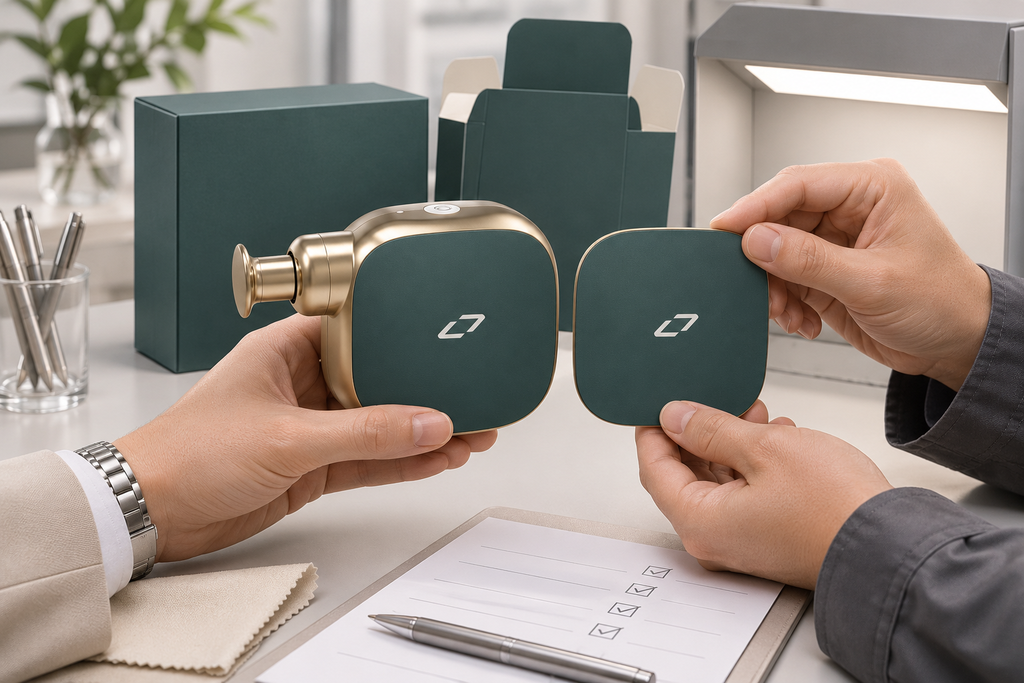
Choose a Supplier Who Can Explain the Approval Process
A reliable customization conversation should leave you knowing what will be made, what you will approve, and what will be checked during production. Ask a prospective supplier to walk you through a recent type of panel-color project or to explain the sample stages available for your chosen model.
Share the quantity, destination, required date, artwork, preferred finish, and physical color reference early. If you also need a logo or illustrated panel, request a sample that brings those elements together. That gives your team a more useful basis for evaluating both appearance and supplier communication.
Pantone matching mini massage gun panels is ultimately a purchasing and production decision, not just a design-file task. Start with a clear reference, approve the color on the actual panel, and document how future units will be compared with that sample. The result is a more dependable path from brand concept to a finished product your team can confidently order again.