
Compare mini massage gun vs full size models for B2B sourcing. Learn how product positioning, target audiences, customization, and factory capabilities affect purchasing decisions.
For brands, importers, distributors, and retailers, choosing between a mini massage gun and a full-size model is more than a product comparison. It is a business decision that affects product positioning, target audience, retail pricing, shipping costs, and long-term sales potential. Understanding the differences between mini massage gun vs full size products helps B2B buyers select the right product for their market and build a more competitive product portfolio.
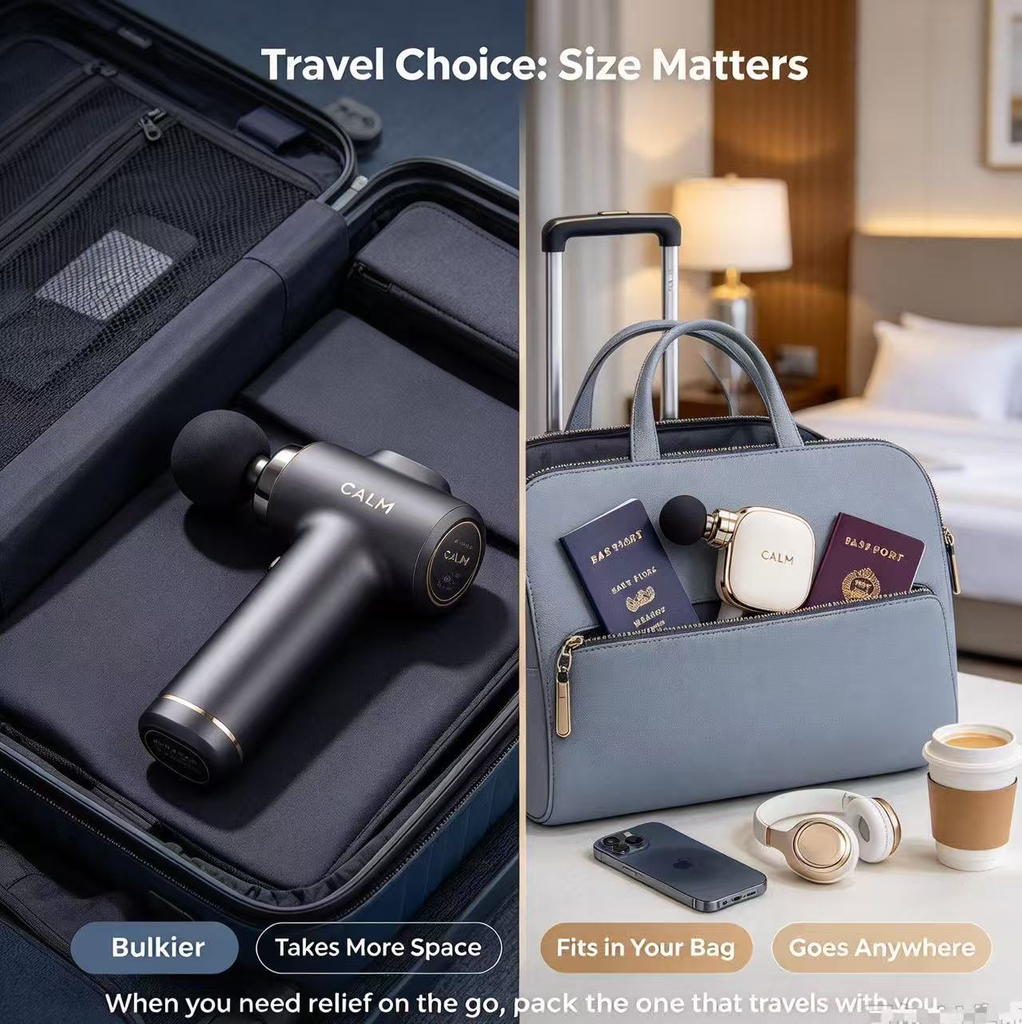
Both product categories offer commercial opportunities, but they serve different customer needs. Mini massage guns emphasize portability, compact design, and everyday convenience, while full-size models typically focus on a larger form factor, a more substantial grip, and a broader range of performance configurations.
For brands, importers, distributors, and retailers, choosing between a mini massage gun and a full-size model is more than a product comparison. It is a business decision that affects product positioning, target audience, retail pricing, shipping costs, and long-term sales potential. Understanding the differences between mini massage gun vs full size products helps B2B buyers select the right product for their market and build a more competitive product portfolio.
Both product categories offer commercial opportunities, but they serve different customer needs. Mini massage guns emphasize portability, compact design, and everyday convenience, while full-size models typically focus on a larger form factor, a more substantial grip, and a broader range of performance configurations.
For buyers evaluating manufacturers, the best choice depends on the intended sales channel, customer expectations, product specifications, and supplier capabilities.
1. Mini Massage Gun vs. Full Size: Key Product Differences
Before placing a bulk order, B2B buyers should understand how the two product categories differ in design, functionality, and market positioning.
Mini Massage Guns: Compact and Portable
Mini massage guns are designed around a smaller form factor. Their compact size makes them suitable for travel-oriented product lines, fitness accessories, corporate gifts, promotional products, and lifestyle retail collections.
Key characteristics may include:
Compact dimensions and lightweight construction
Convenient storage and portability
Rechargeable battery systems
Brushless motor options, depending on the model
Multiple interchangeable massage heads
Customizable colors, logos, and packaging
For distributors and private-label brands, a mini massage gun can also provide an opportunity to introduce a compact product at an accessible price point. Actual pricing depends on specifications, order quantity, materials, customization, and packaging.
However, a smaller product is not automatically better. Buyers should evaluate motor performance, usable battery life, vibration characteristics, heat management, noise levels, and durability before making a purchasing decision.
Full-Size Massage Guns: A Performance-Oriented Product Category
Full-size massage guns generally provide more room for larger batteries, different motor configurations, and ergonomic handle designs. Depending on the model, they may offer higher-amplitude movement, greater force capacity, additional speed settings, or more advanced controls.
These features can appeal to sports equipment retailers, specialist fitness distributors, professional training environments, and brands targeting customers who prioritize performance specifications.
Nevertheless, size alone does not determine performance. A well-engineered mini massage gun may outperform a poorly designed full-size model in selected specifications. Buyers should compare verified technical data rather than relying on appearance or product category alone.
2. Product Positioning: Which Model Fits Your Business?
Product Positioning determines how a product is presented to the market, which customers it attracts, and why buyers should choose it over competing products.
For B2B companies, the right positioning should reflect both market demand and the capabilities of the intended sales channel.
When a Mini Massage Gun Makes Sense
A mini massage gun may be a strong choice for businesses that want to develop:
Portable wellness and fitness accessories
Travel-friendly recovery product collections
Compact gifts for corporate clients and promotional campaigns
Private-label products for online marketplaces
Complementary products for gym accessories and sports retail
Compact lifestyle products for specialty stores
Its smaller size can create advantages in storage, merchandising, and shipping efficiency. However, buyers should calculate the actual packed dimensions and shipping weight before assuming that every mini model will reduce logistics costs.
When a Full-Size Model Is More Suitable
A full-size massage gun may be preferable when the target market prioritizes a larger grip, higher force specifications, extended feature sets, or a more substantial product presentation.
For example, a specialist sports retailer may prefer a full-size model with clearly documented performance specifications, while a travel-accessory brand may prioritize compact dimensions and convenient storage.
For businesses serving several customer segments, offering both sizes can create a tiered product range. A mini model can serve as an entry-level or portable option, while a full-size model can address customers seeking different performance features.
3. Target Audience and Usage Scenarios for the Product
The Target Audience and Usage Scenarios for the Product should guide sourcing decisions from the beginning. Rather than selecting a product solely because it is popular, B2B buyers should identify who will purchase it, where it will be sold, and which product attributes matter most.
| Target B2B customer | Potential product fit | Key sourcing priorities |
| Fitness and sports distributors | Mini or full-size | Performance, durability, consistent quality |
| Online and private-label brands | Mini or full-size | Branding, packaging, differentiation, landed cost |
| Travel and lifestyle retailers | Mini | Compact design, portability, packaging |
| Corporate gifting suppliers | Mini | Logo customization, presentation, delivery schedule |
| Specialty sports retailers | Often full-size, depending on the range | Technical specifications, ergonomics, product reliability |
| General merchandise wholesalers | Mini or full-size | Competitive pricing, order flexibility, market fit |
These are starting points rather than fixed rules. Actual demand varies by country, sales channel, price segment, and customer expectations.
Before confirming an order, buyers should review competitor listings, retail price ranges, customer feedback, return reasons, and product reviews in their target market.
For example, repeated complaints about excessive noise, weak battery performance, or inconvenient packaging may reveal opportunities for product differentiation. A supplier that can address these issues through engineering and quality control may offer more value than one competing only on price.
4. What B2B Buyers Should Compare Before Purchasing
A reliable purchasing decision requires a comparison of the actual specifications, not just the product dimensions.
Motor Performance and Operating Noise
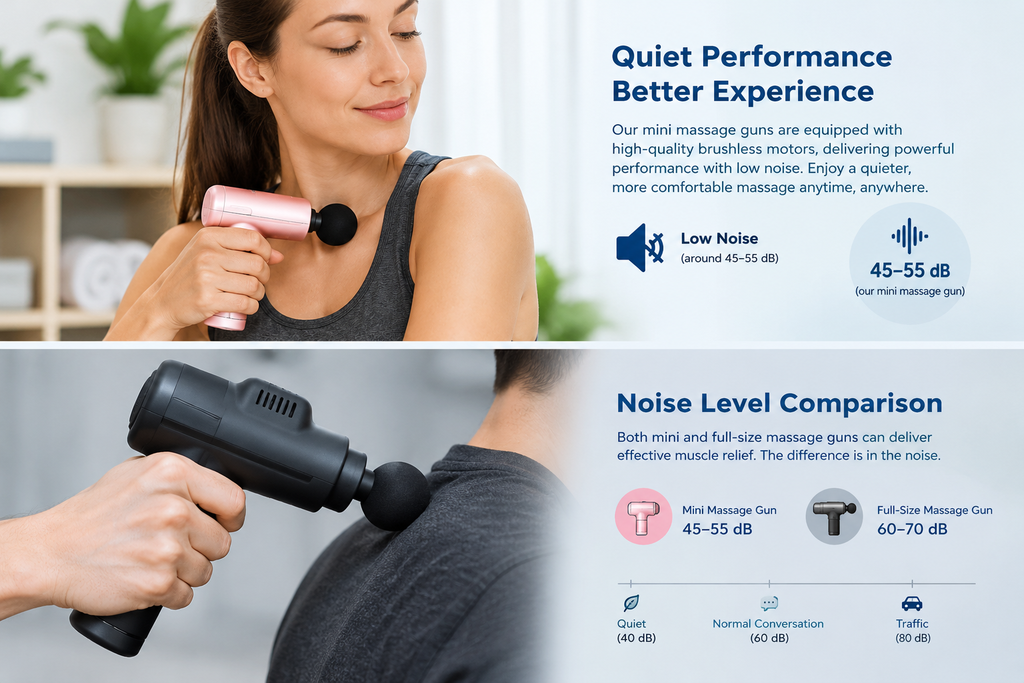
Ask suppliers for motor specifications, speed settings, operating noise data, and available performance test reports. If brushless motors are offered, confirm the exact motor configuration rather than assuming all brushless models deliver the same performance.
Where possible, request samples and compare products under consistent testing conditions.
Battery Capacity and Runtime
Battery capacity alone does not establish usable runtime. Actual performance depends on motor load, speed settings, battery characteristics, and operating conditions.
Ask for documented runtime test results at specified settings, charging requirements, battery supplier information, and relevant transport documentation.
For international shipments, confirm the applicable lithium-battery transport requirements with your supplier and logistics provider.
Materials and Product Durability
Housing materials, internal component quality, assembly consistency, and mechanical design all affect product reliability.
Request information about drop testing, operating-cycle testing, charging protection, and other applicable quality checks. Verify which tests are performed routinely and which are available only upon request.
Massage Heads and Accessories
Check the number, material, shape, and attachment method of the included massage heads. Buyers should also verify whether replacement heads can be ordered separately and whether accessory specifications remain consistent across production batches.
This can be particularly important for distributors planning repeat orders or multi-product bundles.
Certifications and Market Requirements
Different markets and sales channels may require specific product compliance documentation. Depending on the destination and product configuration, relevant requirements may include applicable electrical safety, electromagnetic compatibility, chemical compliance, battery safety, and transport documentation.
Do not rely on a generic statement that a product is “certified.” Ask for documents matching the actual model, manufacturer, and applicable requirements. Confirm the requirements with a qualified compliance professional when necessary.
5. Why Buying Direct from a Factory Can Benefit Your Business
Working with a direct factory can provide B2B buyers with closer communication on product specifications, customization, production planning, and quality requirements.
However, factory-direct purchasing is not automatically the lowest-cost option. Buyers should evaluate the supplier’s manufacturing capability, engineering support, quality system, and ability to deliver consistent products.
Customization and Private-Label Development
A manufacturer may offer several customization options, including:
Logo printing or other branding methods
Custom product colors and finishes
Retail boxes and gift packaging
Accessory combinations
Product specifications and feature configurations, where engineering capabilities allow
Before mass production, confirm all artwork, logo placement, color references, packaging dimensions, labeling, and approved product specifications in writing.
For customized products, a signed sample approval or documented golden sample can help reduce disagreements between the buyer and manufacturer.
Minimum Order Quantity and Cost Structure
Minimum order quantity (MOQ) can vary by model, color, packaging, and customization method. A factory may accept a lower quantity for standard products but require a larger order for custom colors or specially printed packaging.
Ask suppliers to separate the main cost components where possible:
Unit product cost
Customization and tooling charges
Packaging costs
Sample and testing fees
Shipping and other applicable expenses
Compare the total landed cost rather than the factory unit price alone. This approach gives a more realistic view of profitability and helps avoid unexpected expenses.
Production Lead Time and Quality Control
Request a production schedule that identifies sample approval, material preparation, assembly, inspection, and shipment milestones.
Clarify how the factory handles defective units, component substitutions, rework, and production delays. Buyers should also confirm whether inspection standards are documented and whether pre-shipment inspections can be arranged.
For repeat orders, retain approved specifications and quality records so that later batches can be compared against the original requirements.
6. How to Evaluate a Massage Gun Supplier
When comparing suppliers, use a consistent evaluation framework rather than selecting the lowest quotation.
First, verify whether the company is an actual manufacturer, a trading company, or a business using a mixed sourcing model. Request factory information, relevant production evidence, and details about which processes are performed in-house.
Second, assess sample quality. Check assembly gaps, surface finish, controls, charging performance, noise, vibration consistency, and accessory fit. Test the sample against the specifications quoted by the supplier.
Third, evaluate communication. A reliable supplier should be able to explain technical differences, identify customization limitations, provide realistic lead times, and document agreed specifications.
Finally, review quality assurance and after-sales arrangements. Confirm inspection criteria, defect-handling procedures, spare-part availability, warranty terms, and responsibility for nonconforming products in the purchase agreement.
A strong B2B supplier relationship depends on predictable quality and clear communication—not simply a low initial price.
7. Should Your Business Source Mini or Full-Size Models?
For many B2B buyers, the decision is not necessarily about choosing one category permanently. It is about matching the right product to a specific market opportunity.
Choose a mini massage gun when portability, compact merchandising, gifting, or a differentiated private-label product is central to your strategy. Consider a full-size model when your customers prioritize particular performance specifications, grip preferences, or an expanded feature set.
If your business serves multiple channels, compare the commercial potential of both categories using sample testing, market research, target retail pricing, and realistic cost calculations.
You can also start with one model, collect feedback from distributors or pilot customers, and expand the range once demand and product performance have been validated.
Conclusion: Making the Right Mini Massage Gun vs. Full-Size Decision
The choice between a mini massage gun and a full-size massage gun should be based on product positioning, target audience, usage scenarios, technical performance, and total sourcing cost.
For B2B brands and distributors, mini models can create opportunities in portable wellness products, private-label collections, corporate gifting, and compact retail categories. Full-size models may be better suited to customer segments that prioritize specific performance features or a larger product design.
When evaluating mini massage gun vs full size, buyers should compare verified specifications, test product samples, assess compliance documentation, and calculate the total landed cost before committing to mass production.
Working with a capable direct factory can also make it easier to discuss customization, packaging, quality standards, and repeat-order consistency. By aligning product selection with actual market demand and supplier capabilities, B2B buyers can build a more competitive massage gun range and establish a stronger foundation for long-term business growth.